
Stealth AI Model Releases and Emerging Frontier AI Models
Explore stealth AI model releases, including Ox Alpha, pricing, risks, and how emerging frontier AI models impact coding and development.

The shift is real: model launches are becoming public experiments
Frontier AI releases are increasingly arriving before their names, papers and formal product pages. A model appears on a routing platform, attracts developers through free access or unusually low pricing, then accumulates benchmark screenshots, bug reports and origin theories in public.
Ox Alpha is the clearest recent example. It appeared anonymously on OpenRouter on August 20 as a model positioned for coding, agentic workflows and multimodal input, without a model card, technical report or confirmed developer identity. [1][4]
That approach is no longer an isolated curiosity. The reporting around earlier anonymous models, later attributed to Chinese AI labs, suggests a recognizable pattern: temporary aliases can serve as live load tests, blind comparisons and marketing campaigns before formal disclosure. [4]
At the same time, coding agents have made model substitution unusually easy. Nate Herk’s AI Automation channel demonstrated routing Ox Alpha through the Claude Code command-line workflow via OpenRouter, rather than using an Anthropic model directly.
That distinction matters. Claude Code is a coding-agent environment that can inspect files, invoke tools and edit a repository. It is not itself the intelligence producing each plan or patch when users redirect it to a third-party endpoint.
The result is a more modular landscape. Developers can pair an established agent interface with whichever model is cheapest, currently available, or strongest on their own tasks, including models whose provenance is uncertain.
Ox Alpha showed the appeal, and the weakness, of stealth releases
The initial Ox Alpha attention came from an attractive combination: a one-million-token context window, image and video input claims, tool use, structured output support, and a period of no-cost access. [1][4]
For an engineer working on codebases, that package has obvious appeal. A large context window can reduce how often an agent has to summarize or discard repository information, while vision can help with screenshot-driven debugging and frontend verification.
The hard part is separating a useful preview from evidence of broad frontier capability. Community testing cited an approximately 80 percent pass rate on a 10-task DeepSWE subset, compared with reported figures of roughly 52 percent for GPT-5.6 Sol and 65 percent for Claude Fable 5. [1]
Those numbers are interesting, but they do not establish that Ox Alpha beats either model generally. Ten tasks is a small sample, task selection changes results, and community runs may differ in prompts, tools, retry policies, execution environments and scoring rules.
The independent research brief is especially clear here: there is no verified Ox Alpha result for the full DeepSWE benchmark. Comparable top-model scores on broader coding evaluations sit around 70 to 73 percent, making any direct superiority claim premature.
This is not a minor methodological complaint. Agent benchmarks measure a coupled system: model reasoning, scaffold design, shell permissions, test environment, context policy, tool-call reliability and the budget allowed for retries all affect the final score.
A model that closes eight of ten selected repository issues may be impressive. It may also be unusually well matched to that task subset, or allowed to spend more tokens and time than the comparison systems.
The videos from AI Revolution and 1littlecoder both surfaced a more operationally meaningful limitation: Ox Alpha could complete visually impressive generated interfaces and coding tasks, but often did so slowly and with lengthy reasoning traces.
Nate Herk’s AI Automation channel reported a landing-page task and a data-analysis deliverable taking about six hours each through the routed Claude Code setup. That is not an official benchmark, but it illustrates the difference between eventual completion and useful developer throughput.
Latency, stoppages and recovery behavior are part of real capability. Reports of OpenCode listings disappearing, agent runs halting and manual resets being required make Ox Alpha difficult to classify as a dependable production dependency today. [1]
The origin mystery is useful evidence, but not confirmation
Online forensic work tried to identify Ox Alpha from tokenizer behavior, multimodal token counts, refusal patterns and stylistic traits. Much of that analysis points toward the GLM family associated with Z.ai, formerly known as Zhipu AI. [4]
That is plausible, not proven. The research brief states that Ox Alpha’s developer remained officially unconfirmed as of August 28, despite widespread claims that it had been revealed as GLM-5.3-Flash.
This is exactly where launch narratives tend to outrun evidence. A shared tokenizer or similar video encoding behavior can indicate common lineage, a compatible serving layer, a wrapper, a fine-tune, or simply an incomplete public comparison.
The later GLM-5.3-Flash release makes the hypothesis more commercially relevant, whether or not it resolves the attribution question. OpenRouter lists GLM-5.3-Flash at $0.15 per million input tokens and $0.50 per million output tokens. [3]
That price is temporarily reduced by 50 percent until September 9, 2026, according to the pricing research. It suits high-volume coding assistance, batch extraction and experimentation where low marginal cost matters more than a premium support agreement. [3]
By contrast, Claude Sonnet 4.6 costs $3 per million input tokens and $15 per million output tokens through OpenRouter, plus the platform’s 5.5 percent fee. [3] It suits projects that value established vendor support and predictable access enough to justify a substantially higher bill.
Neither sticker price is a complete cost estimate. Token consumption, output verbosity, failed tool calls, retries, caching behavior and the human time spent supervising repairs can dominate the cost of an agentic workflow.
A cheap model that produces long hidden or exposed reasoning traces can consume more tokens than expected. A low per-token rate is useful, but it does not automatically translate into the lowest cost per resolved issue.
Claude Code is part of the same trend, not an exception
Claude Code has become a useful lens for this market because it makes the model layer more visible. Users who once treated a coding assistant as a single product now see that the agent harness and the inference model can be separated.
The comparison published by Nate Herk’s AI Automation channel between Claude Code and OpenAI’s Codex on website-generation tasks reinforces another point: workflow results depend on the whole system, not an abstract model ranking.
In that creator’s examples, Codex often produced a more concise design workflow at lower token use and lower reported cost, while Claude Code sometimes used multiple subagents and substantially more output tokens. Those are informal demonstrations, not controlled evaluations.
Still, they identify questions project teams should ask before adopting any agent. Does it produce working code? Does it inspect its own output? Does it work at common viewport sizes? How many retries does it need, and can a developer understand its changes?
The answer is not simply to default to the newest hidden model. Claude Code itself has meaningful operational caveats. Research cited in the brief found that more than 67 percent of over 3,800 analyzed bugs involved API, integration or configuration failures.
The same research attributes 18.3 percent of issues to API errors, 14 percent to terminal issues and 12.7 percent to command failures. Its fault localization can be relatively strong, but strategy formation, logic synthesis and problem understanding remain weaker areas.
There are also security concerns around Anthropic’s Model Context Protocol. Vulnerabilities identified in April 2026 exposed remote-code-execution risks across a large ecosystem of downloads and servers, and patches have not fully resolved root protocol issues.
That does not make Claude Code unusable. It means an agent that can access shells, repositories and external tools should be operated like infrastructure, with scoped credentials, sandboxed execution, dependency review, audit logs and human approval for consequential changes.
Why this is happening now
Stealth releases make economic sense because the industry has reached a point where static benchmark charts reveal less than deployment traces. Labs need to know whether models hold context, call tools correctly, survive long sessions and behave under real traffic.
Open routing platforms provide that feedback quickly. They expose models to varied prompts, frameworks and workloads without requiring a laboratory to recruit every tester or commit immediately to a brand, final pricing tier or formal capability claim.
Anonymous evaluation also reduces brand bias. A developer may give a model another chance if they do not know it comes from a less fashionable lab, and may scrutinize a disappointing result more honestly if it lacks a familiar logo.
There is a geopolitical dimension as well. Chinese model developers have strong incentives to establish technical credibility through accessible coding and multimodal models, particularly where hardware constraints, export controls and platform distribution complicate conventional launch strategies.
The regulatory environment makes the lack of disclosure more awkward. The United States issued a federal executive order on June 2, 2026 creating a voluntary frontier-AI framework and emphasizing cybersecurity for critical infrastructure. [5]
In Europe, enforcement of the EU AI Act began on August 2, 2026, adding risk-tier obligations and potential fines up to €15 million or 3 percent of global turnover. GDPR data-minimization requirements add further constraints for model deployments. [6]
California’s Transparency in Frontier AI Act also requires safety plans and incident reporting, with penalties that can reach $1 million. [6] An opaque model may be easy to try, but it is harder to justify in regulated workflows.
What to do when planning an AI project
The practical response is not to avoid emerging models. It is to design for replacement. Put a provider-neutral interface between your application and model APIs, record model identifiers per request, and make context, tools and retry policies configurable.
Run your own small evaluation set before committing. Include representative repository tasks, messy documents, ambiguous requests, refusal-sensitive queries, tool failures and latency budgets. A polished coding demo or a ten-task benchmark subset is not enough.
Keep an evaluation log that records success rate, wall-clock time, tokens, retries, human correction time and failure mode. This will reveal whether a cheaper model is actually economical for your work, rather than merely cheap per million tokens.
Do not send proprietary source code, credentials, customer records or regulated data to a stealth endpoint unless its provider identity, retention terms, location, training-use policy and security posture are clear. Zero-data-retention claims are useful only when documented and enforceable.
For low-risk work, emerging models can be excellent options. GLM-5.3-Flash pricing makes it suitable for drafting, code explanation, test generation, non-sensitive automation and evaluation experiments where a team can tolerate changing availability. [3]
For production systems, separate experimentation from dependency selection. A model can earn a place in an internal benchmark harness before it earns access to deployment credentials, customer data or an autonomous pathway to modify live infrastructure.
The important trend is not that an anonymous model may have briefly looked better than familiar frontier systems. It is that model capability, identity, interface and distribution are now decoupling, and project architecture needs to catch up.
Frequently Asked Questions
What are stealth AI model releases and why are they important?
Stealth AI model releases are anonymous or minimally documented launches of AI models on routing platforms, often before formal papers or product pages appear. They serve as live load tests, blind comparisons, and marketing campaigns, allowing developers to experiment with new capabilities and pricing in real time. This approach reflects a shift toward public experimentation and modular AI ecosystems.
How does Ox Alpha compare to other frontier AI models?
Ox Alpha shows promising results on a small 10-task DeepSWE subset, reportedly passing about 80% of tasks, which is higher than GPT-5.6 Sol (~52%) and Claude Fable 5 (~65%). However, no verified data exists for Ox Alpha on the full DeepSWE benchmark, where top models score around 70–73%. Its performance claims remain tentative due to limited, unofficial testing and operational issues like latency and reliability.
What are the risks of using anonymous AI models in production?
Anonymous AI models like Ox Alpha lack documentation, model cards, and confirmed developer identities, making it difficult to assess their capabilities and constraints. Users have reported integration problems such as disappearing listings, agent stoppages, and manual resets. Sensitive data should be kept away from such endpoints until security controls, data retention policies, and provider jurisdictions are clearly known.
How do coding agents like Claude Code interact with stealth models?
Coding agents like Claude Code act as interfaces or workflows that route tasks to underlying AI models, which may be third-party or anonymous. While Claude Code provides tools for file inspection and repository edits, the intelligence depends on the routed model, affecting latency, reliability, and data handling. This modular setup allows pairing established agents with various models but can introduce operational complexity.
What pricing models exist for emerging AI models like GLM-5.3-Flash?
GLM-5.3-Flash, widely linked to Ox Alpha, is priced on OpenRouter at $0.15 per million input tokens and $0.50 per million output tokens, with a temporary 50% discount through September 9, 2026. Claude Code’s pricing on OpenRouter aligns with Anthropic’s rates, which are significantly higher, and include additional platform fees. Pricing is subject to change and should be verified with official OpenRouter sources.
How we researched this
This article was assembled from 5 video sources across 3 channels, 6 cited references.
Nothing here is based on hands-on testing. Where a figure or finding appears, it belongs to the source cited beside it, and the writing says so rather than implying otherwise. Every source is listed below so you can check it.
Sources
This Stealth Model Makes Claude Code Free. Here's How. — Nate Herk | AI Automation
This New AI Beats the Best Models... But No One Knows Who Built It — AI Revolution
I Tested Claude Code vs. Codex on Design. It Wasn't Even Close. — Nate Herk | AI Automation
I Tested Ox Alpha (stealth model)!!! — 1littlecoder
Ox Alpha is GLM 5.3 Flash!!! — 1littlecoder
Ox Alpha Revealed: The Stealth Model Was Z.ai GLM-5.3-Flash | AI Catchup
AI Safety Regulation: Global Frameworks and Frontier Model Compliance | Mapshock
Watch Emerging Frontier AI Models and Stealth Releases on Youtube
Also from the sources
Related Articles

GPT-6 Astra Frontier AI Model
Explore GPT-6 Astra frontier AI model's features, pricing, context window, benchmarks, and practical applications in long-task workflows.
AI Models and Chips Comparison in 2026: Jalapeño vs Gemini
Compare AI models and chips in 2026, including OpenAI's Jalapeño and Google's Gemini 3.7 Flash, with insights on performance, cost, and deployment.
TrueForge vs Hermes Agent
Compare TrueForge and Hermes Agent, two open source AI agent platforms, to find the best fit for deployment, security, and personal assistant use cases.
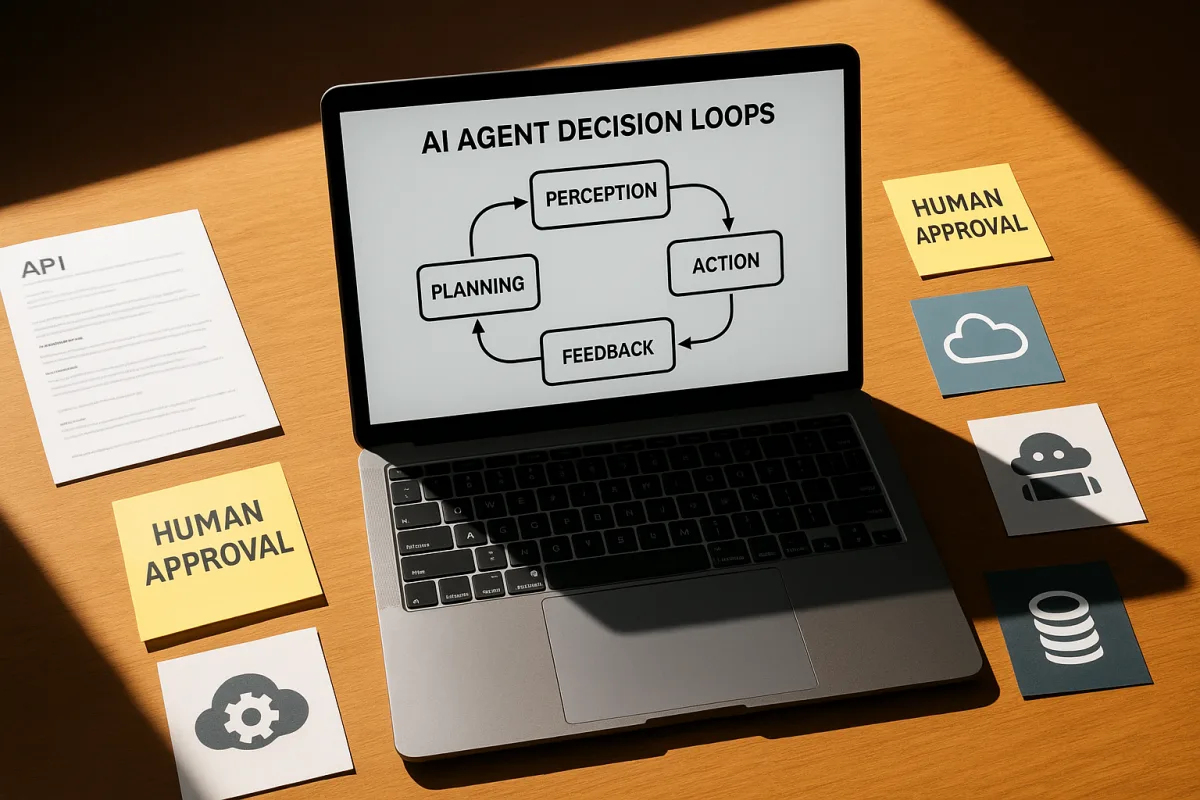
AI Agents Action Selection
Explore AI agents' action selection, integration challenges, and security in automation. Learn about personal AI agents and best practices.