
AI Market Dynamics: Nvidia, Bill Gates, and Investment
Explore AI market dynamics covering Nvidia's pricing, Bill Gates' AI policy, and current investment trends shaping the AI industry.
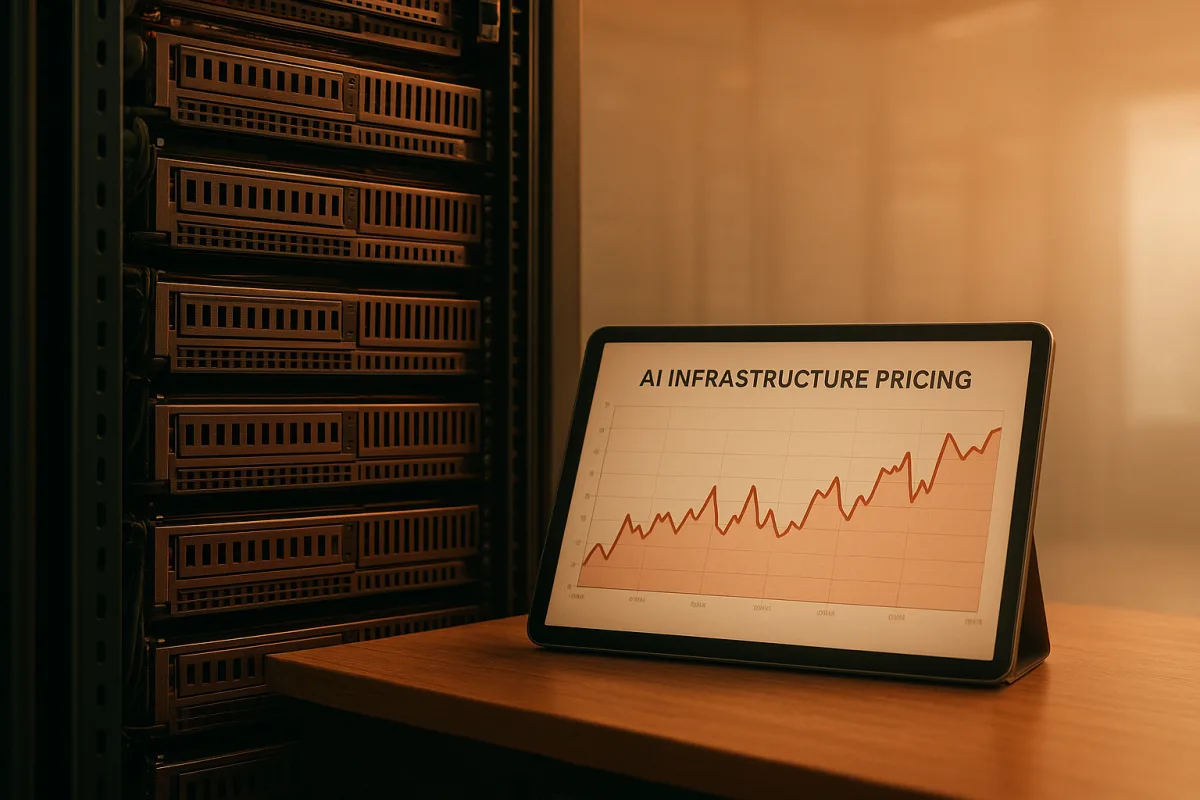
AI market dynamics: Nvidia’s pricing power, Bill Gates’ policy turn, and where investment risk is moving
The quick list
- Best overall: Nvidia AI infrastructure, for investors seeking direct exposure to current data-centre AI spending and able to tolerate concentration, supply-chain and valuation risk.
- Best value: Custom AI accelerators from hyperscalers, for cloud platforms and large model builders seeking lower long-run dependence on Nvidia rather than a near-term replacement.
- Best for small spaces: AI governance and labour-transition investment, for policymakers, enterprises and funds looking for exposure to the less glamorous but increasingly necessary compliance, safety and workforce layer.
The useful question is not whether AI is attracting capital. It plainly is. The decision is where the durable economics sit: in Nvidia’s hardware bottleneck, in the buyers trying to escape it, or in the regulatory and labour infrastructure emerging around deployment.
Those choices have very different price structures, scales and time horizons. Nvidia sells scarce compute systems into an unusually concentrated market. Custom silicon requires enormous internal demand and engineering resources. Governance tools and workforce programmes have smaller initial budgets, but may gain importance if regulation turns from discussion into enforceable requirements.
Comparison table
| Option | Price and capital requirement | Market size or scale | Operating layout | Main advantage | Main trade-off |
|---|---|---|---|---|---|
| Nvidia AI infrastructure | AI server-system prices are expected to rise more than 15 percent for early-2027 shipments. [4] Consumer RTX pricing has also risen sharply, with the RTX 5070 reported at $899.99 and the RTX 5060 Ti 16GB at $804.99. [12] | Nvidia held roughly 70 percent of the AI-chip market in early 2026, according to industry reporting. [8] | Full-stack supplier: GPUs, networking, systems and CUDA software ecosystem | Immediate exposure to data-centre AI demand and established developer tooling | Memory inflation, packaging constraints, customer concentration and increasing customer incentives to design around Nvidia |
| Hyperscaler custom accelerators | High upfront design, software-porting and deployment costs. Public sources do not provide a comparable unit price. | Built for very large internal cloud and model-training fleets | Vertically integrated: chip design, cloud platform, model workloads and data-centre fleet | Can reduce long-run cost and supply dependence for Google, Amazon, Meta, Microsoft and OpenAI-style buyers | Limited suitability for smaller customers, slower software maturity and substantial execution risk |
| AI regulation, safety and labour-transition tools | No standard sticker price. Spending is mainly policy, compliance, auditing, organisational redesign and retraining | Smaller today than compute infrastructure, but potentially broad across employment, healthcare, finance and public services | Cross-sector layer spanning model providers, employers and governments | Benefits from regulatory reporting, incident-response and workforce-transition needs | Rules remain fragmented, enforcement is uncertain and revenue timing is difficult to predict |
The listed Nvidia prices are component or system prices, not the full cost of deploying AI capacity. A real installation also requires racks, networking, power delivery, cooling, data-centre space, operations staff and electricity. For cloud buyers, financing and reserved-capacity contracts can matter as much as GPU list prices.
Nvidia: the strongest near-term revenue case, with a more expensive input bill
Nvidia remains the cleanest public-market proxy for AI infrastructure demand because it captures spending at the point where training and inference workloads meet scarce high-performance compute. Its confirmed Q2 fiscal 2026 revenue was $46.7 billion, up 56 percent year over year. [11]
That is already extraordinary growth from a very large base. It should not, however, be blended with The Verge’s reported $96.2 billion quarterly figure or a purported $108 billion forecast without verification. The independent reporting available for this roundup does not establish audited Q2 fiscal 2027 results.
MoneyWeek reported analyst expectations around $2.10 in Q2 fiscal 2027 earnings per share, compared with $1.05 a year earlier. [3] That is an expectation, not a result. Investors should distinguish a consensus model from Nvidia’s filed revenue, gross-margin and cash-flow numbers.
The more concrete current development is pricing. Reuters reported that Nvidia customers were notified of AI-related server-system price rises exceeding 15 percent for early-2027 shipments, driven principally by higher high-bandwidth memory costs. [4]
This matters because it complicates the usual “AI demand is high, therefore Nvidia wins” formulation. Higher selling prices may protect revenue and margins, but they also raise the economic hurdle for model developers, cloud providers and enterprises trying to move pilots into production.
Consumer GPU pricing tells a related but separate story. Reports cited the RTX 5070 at $899.99, up 36 percent, and the RTX 5060 Ti 16GB at $804.99, up 39 percent, amid memory-cost pressure. [12] Those are graphics-card prices, not a direct indicator of data-centre system economics.
Supply conditions help explain Nvidia’s leverage. Advanced semiconductor packaging capacity at Taiwan Semiconductor Manufacturing Company has reportedly been sold out through Q3 2027, tightening a supply chain that also depends on HBM from Samsung, SK Hynix and Micron. [9]
The trade-off is that Nvidia’s customers have the strongest incentive, and the deepest pockets, to reduce dependence. A 70 percent AI-chip share is evidence of present strength, but it is also a reason for major cloud platforms to fund alternatives. [8]
Custom accelerators: not an Nvidia collapse thesis
Google, Amazon, Meta, Microsoft and OpenAI are among the large AI buyers developing or using custom accelerators. Tom’s Hardware documented the expanding field, including Google TPUs, Meta’s MTIA effort and Broadcom-backed custom ASIC programmes. [7]
These projects are often presented as proof that Nvidia is about to be displaced. That reading is too neat. A custom accelerator works best when the buyer operates vast, predictable workloads and can control models, compilers, frameworks and data-centre deployment.
That is a very different layout from the market served by broadly available Nvidia systems. Startups, universities, enterprises and many cloud customers want flexibility, mature libraries and the ability to run changing workloads. CUDA’s practical importance is not erased by a successful internal ASIC.
The more plausible medium-term outcome is segmentation. Hyperscalers use more custom silicon for selected inference and stable internal workloads, while Nvidia remains central for frontier training, general-purpose acceleration and buyers without the scale to justify chip design.
This is still a meaningful investment trend. It can constrain Nvidia’s share of the largest buyers’ incremental spending, particularly if memory and system price rises continue. But no source here establishes that custom accelerators have already produced a material collapse in Nvidia revenue or pricing power.
Bill Gates’ shift: policy risk is becoming an investment variable
Bill Gates’ recent AI argument is a marked shift from the more optimistic tone of his 2023 writing. According to reporting by The Verge AI, he now frames AI as potentially “the greatest equalizer ever invented” or “the worst source of injustice.”
His most specific proposals focus on labour displacement. Gates has advocated taxes on AI tokens and robots, stronger social funds, and a category of “Human Reserved” work where people retain protected roles. Axios similarly reported his call to keep some jobs off-limits to AI. [1]
The labour data gives that concern more grounding than generic automation rhetoric, while still falling short of a complete forecast. Job postings declined 23 percent year over year for software development, 31 percent for legal research, 44 percent for content writing and 28 percent for basic financial analysis. [10]
Those measures describe hiring demand, not a clean count of jobs destroyed by AI. Postings move with interest rates, company retrenchment and ordinary business cycles. Still, the concentration in text-heavy, routine analytical and entry-level work is difficult to dismiss as merely hypothetical.
For investors, Gates’ importance is not that he has supplied a complete regulatory blueprint. He has not. The importance is that labour disruption, safety controls and international coordination are moving closer to the centre of AI policy debates.
A bipartisan US AI Safety Bill introduced in July 2026 would require advanced systems to include a kill switch and incident reporting, while giving the Department of Homeland Security intervention powers. [5] That proposal is not proof that requirements will become law or that technical controls will work.
Gates has also sought discussions with Chinese President Xi Jinping on AI risk mitigation and possible bilateral limits on dangerous model releases. [6] This is directionally important, but it is not a global agreement, nor does it solve verification, definitions or enforcement.
The investment landscape beyond hardware
The immediate investment stack still favours infrastructure: chips, memory, networking, power generation, cooling and data-centre construction. Nvidia’s revenue trajectory reflects this. Yet a hardware boom creates second-order markets that are easier to overlook when quarterly chip sales dominate headlines.
One is compliance infrastructure. If incident reporting, model evaluations, deployment logging and access controls become mandatory, firms will need operational systems rather than high-level AI principles. The likely buyers are regulated enterprises and frontier-model providers, not every small company using a chatbot.
Another is efficiency. Rising GPU and server prices make inference optimisation, smaller models, quantisation, workload scheduling and specialised hardware economically more valuable. This is not a claim that cheaper methods eliminate demand for Nvidia hardware. It is a claim that expensive compute makes waste harder to tolerate.
A third is workforce transition. Gates’ warning of permanent, widespread unemployment goes beyond available evidence, but employers already face practical questions about junior hiring, reskilling, accountability and human review. The data supports disruption in exposed occupations, not confidence about its final scale. [10]
Who each option suits
Nvidia AI infrastructure suits investors and operators who want direct, near-term exposure to spending on training and inference capacity. The case rests on confirmed large-scale growth, supply constraints and an entrenched ecosystem. The price is exposure to rising memory costs, customer concentration and unusually high expectations.
Custom accelerators suit hyperscalers, model labs and very large enterprises with stable workloads and the resources to build hardware, compilers and deployment software together. They are not a general bargain GPU substitute. Their advantage comes from scale and integration, not from a simple lower purchase price.
AI governance, safety and labour-transition tools suit organisations planning for regulation and workforce change rather than betting only on model capability. This is the least mature commercial category, because rules are unsettled. It is also the option most directly aligned with the policy risks Gates is emphasizing.
Frequently Asked Questions
How is Nvidia influencing AI market dynamics in 2026?
Nvidia remains the clearest beneficiary of AI infrastructure spending, holding roughly 70 percent of the AI-chip market in early 2026. It sells scarce compute systems into a concentrated market and offers a full-stack solution including GPUs, networking, systems, and software. However, Nvidia faces supply-chain constraints and growing competitive pressure from large customers developing custom AI accelerators.
What are Bill Gates' views on AI regulation and investment?
Bill Gates emphasizes the risks posed by powerful AI systems and supports regulatory efforts such as the U.S. AI Safety Bill requiring kill switches and incident reporting. He is also pursuing international coordination, including talks with China, to mitigate AI risks. While these initiatives signal important policy directions, no comprehensive global AI regulatory framework currently exists.
Why are Nvidia AI server prices expected to rise in 2027?
AI server-system prices are expected to increase by more than 15 percent for early-2027 shipments due primarily to constrained and expensive high-bandwidth memory (HBM) supplies from vendors like Samsung, SK Hynix, and Micron. This price hike reflects infrastructure cost pressures distinct from consumer GPU pricing, which has also risen sharply.
What investment trends are shaping the AI industry today?
Investment is concentrated in three main areas: Nvidia’s AI infrastructure, custom AI accelerators developed by hyperscalers, and AI governance and labor-transition tools. Nvidia offers immediate exposure to data-center AI demand, custom accelerators aim to reduce long-term dependence on Nvidia hardware, and governance tools address emerging regulatory and workforce challenges.
How do custom AI accelerators affect Nvidia's market position?
The largest competitive pressure on Nvidia comes from its biggest customers—such as Google, Amazon, Meta, and Microsoft—building custom AI accelerators. These efforts can reduce long-run dependence on Nvidia hardware but are unlikely to quickly displace Nvidia’s established software ecosystem. Custom accelerators require substantial upfront costs and have slower software maturity, limiting their near-term impact.
How we researched this
This article was assembled from 8 published articles, 12 cited references.
Nothing here is based on hands-on testing. Where a figure or finding appears, it belongs to the source cited beside it, and the writing says so rather than implying otherwise. Every source is listed below so you can check it.
Sources
Nvidia is about to be a hundred-billion-dollar-a-quarter company — The Verge AI
Bill Gates is deeply worried about AI, and he’s no longer staying quiet — The Verge AI
Bill Gates Warns on AI Job Risks and Urges Regulation — GuruFocus
Nvidia Earnings Loom as Gates Warns on AI Risks — StartupHub.ai
Strong AI chip demand fuels Nvidia's Q2 results well beyond Wall Street's expectations — The Washington Post
New artificial intelligence major bridges the sciences and humanities — The Ithacan
Bill Gates Issues Stark Warning About Artificial Intelligence: 'We Are Not Preparing Adequately' — BroBible
In a divided America, the left and right unite to oppose artificial intelligence data centers — WHYY
Strong AI chip demand fuels Nvidia's Q2 results well beyond Wall Street's expectations
Nvidia customers notified about AI-related price hikes above 15%, Bloomberg News reports By Reuters
Gates seeks Xi talks on global AI risks and safeguards | IDNFinancials
Nvidia faces its biggest threat yet as tech giants build their own AI chips - Los Angeles Times
AI Job Displacement: Actual Labor Market Data from Q4 2025 and Q1 2026 | iBuidl.org
NVIDIA Corporation - NVIDIA Announces Financial Results for Second Quarter Fiscal 2026
Taiwán avisa: el precio de las GPU de Nvidia aumentará "entre un 20% y 30%" muy pronto
Related Articles

AI Regulatory Approaches in 2026: Comparing Key Frameworks
Explore AI regulatory approaches in 2026, comparing risk-based rules, federal task forces, and state-level AI safety measures with real-world examples.

Managed AI Agent Platforms
Explore managed AI agent platforms, their runtimes, pricing models, and ecosystem tools for effective AI agent operations in production.
AI Data Center Power Challenges and Infrastructure Impact
Explore AI data center power challenges, infrastructure demands, and local impacts behind 500 MW commitments in AI data centers.
Nvidia Acquisition of Hugging Face and Its Impact
Explore Nvidia's acquisition of Hugging Face and its effects on open-source AI platforms, neutrality, and the AI ecosystem.