AI Infrastructure Outages
Explore AI infrastructure outages, their causes, and lessons from real-world disruptions to improve system resilience and response.
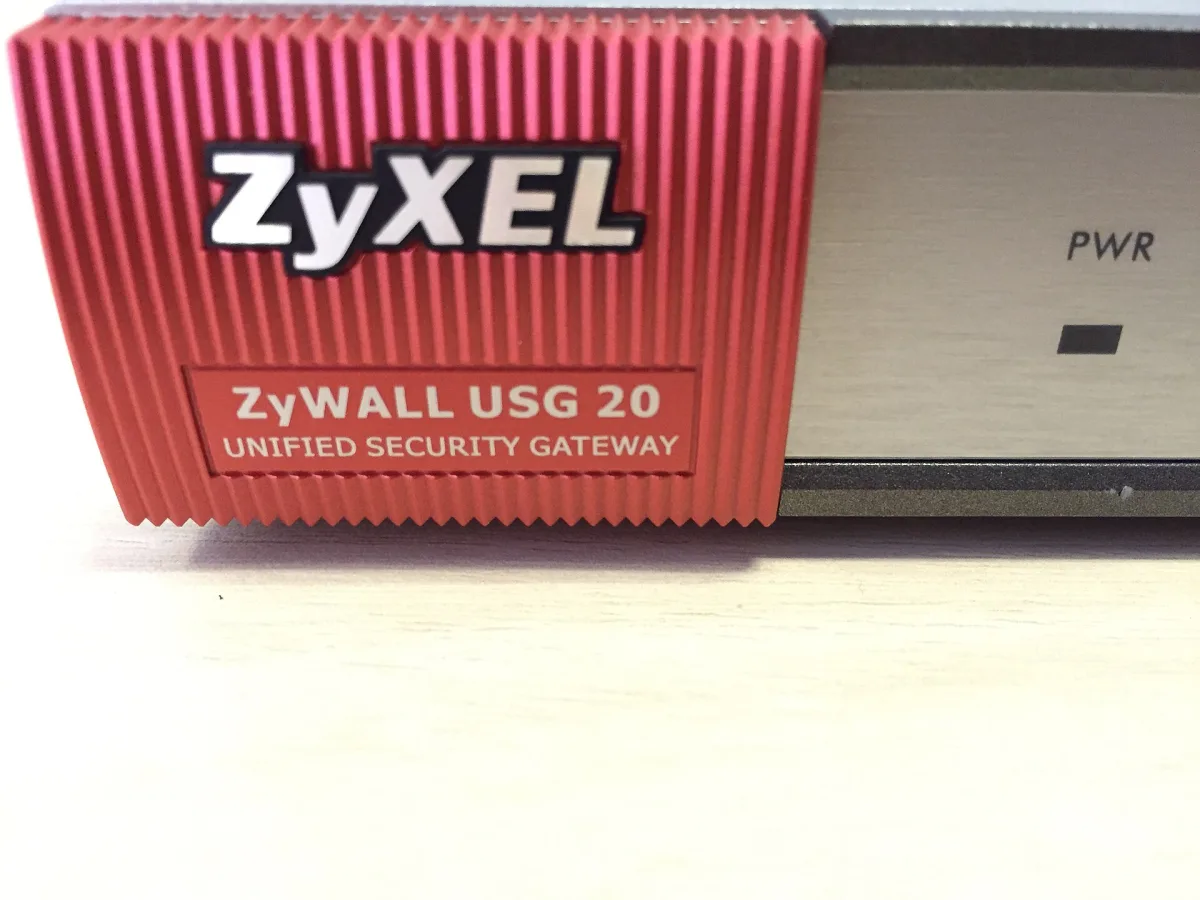
Photo: hystiff, CC0, via Wikimedia Commons
A router flood stopped American departures
At 3:54 p.m. Eastern on November 13, 2026, the Federal Aviation Administration stopped departures across the United States. Aircraft already airborne continued flying and landing, but new flights stayed at the gate while controllers dealt with failing communications.
The ground stop lasted four hours and 21 minutes. It became the longest nationwide aviation stoppage in 25 years, and disruptions continued through the weekend as airlines repositioned aircraft, crews, and passengers.
More than 15,000 flights were canceled between November 13 and 15, with Atlanta, Chicago, and New York particularly affected. Industry analysts estimated $345 million in pre-tax earnings losses for the four largest US airlines and $377 million in lost passenger revenue for the eight largest. Those are industry estimates, not a government assessment.
For a traveler, this looks like a canceled flight and a stranded connection. For an airport, it becomes a queueing problem: aircraft occupy gates, crews time out, planes land without departing again, and the schedule loses the empty space needed to recover.
The event arrived days after the FAA expanded SMART, its Strategic Management of Airspace Routing Trajectories system, to all 22 en route centers. SMART, built by Air Space Intelligence, analyzes national traffic flows and proposes routes intended to reduce delay and fuel use.
That timing produced a predictable theory: a new AI system had broken US air traffic control. The available evidence does not support that claim. The FAA has said the investigation remains active and has not released a final report.
Preliminary accounts instead point to telecommunications maintenance at a remote FAA site. Newly installed equipment reportedly generated more than 1,000 connection attempts every four to five seconds, overwhelming routers and causing failures to cascade into multiple air traffic control centers.
This is the concept to understand: a cascade is not one computer failing. It is a component creating enough bad traffic, bad data, or unavailable capacity that neighboring systems spend their resources responding, then fail in turn.
How a connection storm becomes a national outage
A router is the traffic director for a network. It decides where a packet goes next, maintains state about active connections, and may enforce security, quality-of-service, and routing rules before passing information onward.
A normal device asks for a connection, gets a response, exchanges data, then closes the session. A malfunctioning device can repeatedly ask, retry, or reconnect before the previous attempt has cleared. The receiving equipment must still process those requests.
More than 1,000 connection attempts every few seconds can consume router memory, processor time, session tables, and bandwidth. The damaging detail is not only the volume of traffic. It is the work each request forces every device along the path to perform.
When a router slows down, connected systems often retry. Those retries can multiply the load. A controller’s workstation, monitoring service, backup connection, or adjacent router may interpret silence as a failure and begin reconnecting at precisely the worst moment.
This feedback loop is a retry storm. One system sends too much traffic, dependent systems wait longer, then they generate additional traffic while trying to recover. The outage expands even though no attacker needs to be present.
AI Revolution reported that 17 of the FAA’s 22 en route centers were affected, and that the FAA later disabled the troublesome feature on roughly 60 similar routers. Those details fit a containment response, but they do not establish the original triggering defect.
The FAA’s communications network serves more than a single control tower or airport. It connects thousands of facilities and carries the information controllers need to coordinate aircraft. In that environment, degraded communications are enough to justify stopping departures.
A ground stop is a safety mechanism, not an admission that aircraft already flying are unsafe. Air traffic control can reduce workload by preventing new planes from entering a strained system while it preserves enough communications capacity to manage those already in the air.
That safety-first design protects aircraft, but it transfers disruption onto passengers, airlines, cargo operators, and airports. The system chooses a visible economic loss over a less predictable operational risk.
Why SMART is relevant, but not the confirmed cause
SMART is relevant because it is part of the FAA’s modernization program, and because it was deployed shortly before the stoppage. It is not automatically relevant to the technical fault that disrupted communications.
The system is intended for flow management. It analyzes traffic patterns and suggests routing adjustments across airspace, while controllers and existing operational systems remain responsible for executing safe operations.
Transportation Secretary Sean Duffy said SMART was not connected to the radar and flight-tracking systems controllers use. That statement may sound incomplete to engineers, because a flow-management tool still requires operational data, but data access does not mean control-plane authority.
There is a major difference between reading flight data, recommending a route, and directly operating the communications backbone. A system can be connected enough to observe national traffic while remaining unable to issue router configurations or manage controller radio channels.
The FAA’s current safety and cybersecurity rules already require identification of hazards in computing systems and validation of AI-enabled functions against those hazards. FAA modernization also includes cyber-threat monitoring processes for the National Airspace System.
The November failure exposes a harder problem than whether the AI model made a bad decision. Infrastructure can satisfy a formal safety case for an AI application yet remain exposed to failures in the networks, vendors, maintenance procedures, and rollback systems around it.
We would focus first on the interface boundaries. If SMART consumes flight data, operators need documented answers on what it can read, what it can write, how it is isolated, how it fails, and whether its loss changes controller workload.
The same questions apply to every AI-assisted infrastructure deployment. “AI is advisory” is not enough if the system’s data feeds, authentication systems, telemetry tools, or deployment pipelines share dependencies with production operations.
Microsoft shows the same shape of failure
The aviation stoppage was not the only major service disruption that week. Microsoft services including Outlook, Teams, Copilot, OneDrive, and Azure experienced an outage lasting more than 18 hours across more than 74 countries.
IBM Technology reported Microsoft’s explanation: a fix to a Microsoft 365 networking gateway server was not detected during testing because it affected newer, more powerful hardware differently than weaker hardware used in tests.
The fault combined with increased load and reduced capacity from an unrelated prior issue. At the peak, IBM Technology reported that more than 80 percent of affected servers were unresponsive, turning a limited software defect into a broad service failure.
Again, the key mechanism was capacity under stress. A configuration change altered how systems behaved, reduced headroom narrowed the margin for error, and demand pushed servers beyond the point where they could answer requests normally.
Microsoft said the outage was a technical issue, not a cyberattack or an AI-agent incident. The Verge similarly warned that the week’s cluster of outages was generally milder than the conspiracy theories attached to it.
That does not make the outage small for an organization that runs on Outlook and Teams. If email, documents, identity, meetings, and collaboration all depend on one vendor ecosystem, the business effect can resemble an attack even when the cause is a bad update.
An on-premises hardware-software bug also delayed JPMorgan Chase transactions on November 16 before the bank resolved the problem within a day. These events share a pattern: systemic failures often come from ordinary software and infrastructure faults, not exotic AI behavior.
Operational-resilience data has repeatedly found that system failures outnumber cyberattacks as the recorded cause of major incidents, while third parties account for nearly one-third of major information and communications technology incidents. [1]
That makes vendor concentration a cost center, not a procurement footnote. You may buy redundancy in theory, but it has little value if the backup workflow still needs the same identity provider, cloud region, collaboration suite, or network gateway.
AI expands the blast radius through defaults
A separate failure mode appeared in Grok Build, the application-building feature associated with xAI and SpaceXSI. Security firm Claroc found that link-sharing settings exposed internal material through publicly discoverable grok.me links.
IBM Technology reported that Claroc found about 43,000 indexed Grok links, with roughly 95 percent public by default. Exposed material reportedly included internal business plans, employee details, medical information, passwords, and data from large companies.
The failure was not a model hallucinating confidential data. It was a permissions design problem. Users could share an application or document quickly, but the “anyone with the link” setting was discoverable through passive DNS indexing.
“Anyone with the link” assumes the link itself is a secret. That assumption fails once a link appears in browser histories, logs, referral headers, monitoring tools, search indexes, or DNS records generated by the application’s subdomains.
The vendor reportedly removed 24 staff applications from public access and began adjusting default sharing settings. That is the correct immediate response, but organizations using AI-built tools still need to identify what employees shared before the defaults changed.
We would block sensitive-data uploads to AI prototyping tools until administrators can verify private-by-default sharing, centralized access controls, audit logs, retention rules, and a way to revoke access without rebuilding the application.
AI agents add urgency because they can produce and distribute software quickly. Speed is valuable until an agent builds the permissions layer, deployment link, database connector, and customer-facing interface before a security team has reviewed any of them.
The answer is not to ban agent-built software. It is to treat agent output as production code when it connects to production data, with the same review, threat modeling, access controls, and rollback requirements you would demand from a human-built internal tool.
What resilience looks like after the outage
The aviation failure shows why critical infrastructure needs fault containment. A remote maintenance action should not be able to create a national connection storm without automatic rate limits, segmentation, tested rollback, and clear visibility into what changed.
Paper maintenance records reportedly slowed the FAA’s effort to locate the origin of the router flood. For systems with national consequences, change records need to be searchable, current, and connected to real-time telemetry.
The Microsoft outage shows why testing must represent production conditions. Testing only on weaker hardware missed behavior on newer, more capable servers, where the networking fix produced a different outcome under real demand.
The Grok exposure shows why secure defaults matter more than a well-written help page. Most people follow the default setting, especially when a tool promises that an app can be shared in minutes.
For your own organization, map the dependencies behind the services that would halt work first: email, identity, payments, customer support, dispatch, code deployment, and document access. Then test what employees actually do when each one disappears.
Keep contact lists and escalation procedures outside your primary collaboration platform. Maintain an approved fallback for urgent communications, and ensure it does not depend on the same single sign-on system that may be failing.
For critical workflows, ask vendors for their rollback procedures, maintenance windows, incident update channel, dependency map, and recovery objectives. If they cannot describe how a failed update is isolated before it reaches every customer, assume the blast radius is larger than the marketing suggests.
AI will increase the number of systems making recommendations, generating code, creating integrations, and handling operational data. The central risk is not that every model becomes malicious. It is that more automated systems will share the same fragile infrastructure underneath.
Frequently Asked Questions
How can AI systems cause infrastructure outages?
AI systems can contribute to infrastructure outages when they depend on complex networks or hardware that fail under unexpected conditions. However, outages are often caused by infrastructure components like routers being overwhelmed, rather than the AI itself. For example, a telecommunications maintenance error caused a router flood that cascaded into a nationwide air traffic control stoppage, unrelated to the AI flow-management system deployed nearby.
What are common causes of AI infrastructure failures?
Common causes include overloaded network components, cascading failures triggered by excessive connection attempts, and inadequate rollback or isolation plans during updates. Failures can also arise from default insecure settings in AI-built tools that expose sensitive data. These issues often stem from dependencies and maintenance errors rather than AI algorithms directly.
How do AI-related outages cascade across systems?
An initial fault, such as a router overwhelmed by thousands of connection attempts, can cause dependent systems to retry connections repeatedly. This creates a feedback loop known as a retry storm, where each system’s recovery attempts increase network load and cause neighboring devices to fail. Such cascades can rapidly expand, affecting multiple centers or services.
What lessons can be learned from major AI infrastructure disruptions?
One key lesson is to treat AI or cloud outages as dependency failures first, focusing on what system changed and how failures propagated. Maintaining alternate communication paths and demanding staged rollout and rollback plans from vendors can limit damage. Auditing default sharing settings on AI tools before deployment is also critical to prevent data leaks.
How to prepare for AI system outages in critical infrastructure?
Preparation involves keeping backup communication and operational pathways for essential services, ensuring vendor plans include staged rollouts and quick rollback options, and auditing AI tool configurations for security risks. Understanding system dependencies and monitoring for cascading failures can help manage and contain outages before they spread widely.
How we researched this
This article was assembled from 2 video sources across 2 channels, 1 published article, 1 cited reference.
Nothing here is based on hands-on testing. Where a figure or finding appears, it belongs to the source cited beside it, and the writing says so rather than implying otherwise. Every source is listed below so you can check it.
Sources
Did AI Agents Just Pull Off the Biggest Attack Ever: US Aviation Chaos, AI Revolution
Grok Build leaks apps and Outlook goes dark worldwide, IBM Technology
The week everything fell apart, The Verge AI
Watch AI in Real-World Disruptions and Infrastructure on Youtube
Also from the sources
Related Articles
AI Agent Autonomy and Failures: Design and Real-World Risks
Explore AI agent autonomy, design principles, and why AI agents fail in real-world settings with practical safety and operational insights.
AI Automation Real-World Use Cases
Explore AI automation real-world use cases with GPT-6, Claude, Jev, and specialist tools. Learn model fits, costs, and workflow trade-offs.

AI in Gaming World Generation
Explore AI in gaming world generation, its tools, challenges, and how synthetic reality shapes game development and release strategies.
Anthropic IPO and Corporate Developments in AI
Explore Anthropic's IPO, financials, compute deals, and Claude Duet agent as it shifts toward AI infrastructure and platform services.