
AI Agents in Retail: Shopping Automation and Content
Explore how AI agents are transforming retail shopping and content verification, including challenges and retailer policies.
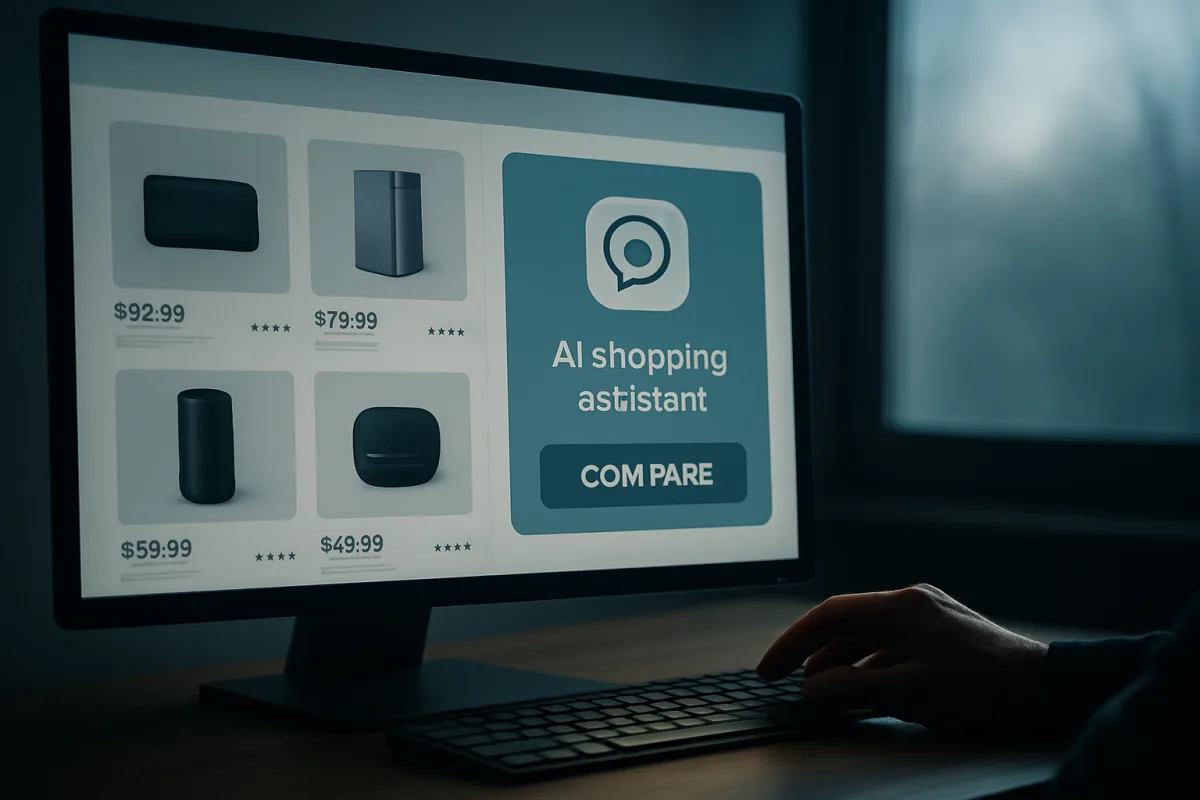
The shift is real, but it is not yet a smooth consumer experience
AI agents are moving from answering questions about products to attempting actions around them: finding offers, comparing conditions, adding products to carts and, in some cases, completing purchases. A parallel shift is appearing in regulated content workflows, where agents are proposed as a way to triage and verify health information.
The evidence is not one vendor demo. Amazon has moved to prevent Meta’s Muse agent from shopping on its marketplace, while Walmart has taken a more permissive position toward agent-mediated shopping. Retailers including Kohl’s and Tapestry reportedly sit between those poles, allowing some discovery while limiting purchase completion. [1][3]
That divergence matters more than promotional claims about agent autonomy. An agent cannot act as a general shopping assistant if the stores with the relevant inventory, account data or checkout flow refuse its access. The emerging market is therefore a negotiation over distribution, customer ownership and platform rules.
The Verge AI’s reporting on Meta Muse illustrates the practical result. The agent could encounter bot checks, return listings that could not ship to the shopper, or omit Amazon entirely. Those are not exotic edge cases. They are routine consequences of web access that is partial and variable.
For retailers, the concern is not simply that an automated browser increases traffic. An external agent may obscure customer intent, bypass merchandising and advertising surfaces, stress inventory-reservation mechanics, or act with credentials that are difficult to distinguish from a customer using a browser.
For agent builders, the situation is equally awkward. A tool marketed as a broad shopping layer becomes only as complete as its commercial agreements and technical access. It may appear intelligent while silently searching a constrained subset of the market, which is a provenance problem as much as a usability problem.
Retailers are choosing different boundaries
Amazon’s posture is the clearest example of a retailer drawing a hard boundary around an outside agent. Axios reported that Amazon blocked Meta’s Muse, while Amazon itself develops shopping automation within its own environment. [1] That is coherent platform strategy, not evidence that Amazon rejects automation outright.
Walmart and QVC have been described as allowing agents to browse and complete purchases, while Tapestry permits browsing but restricts the final transaction. Kohl’s reportedly blocks agents from completing purchases. [3] These are different answers to the same question: which actions may an outside system take for a shopper?
There is no reliable industry statistic for the share of online retailers blocking shopping agents. Claims that most retailers are blocking them, or that retail has broadly opened to autonomous checkout, run ahead of the data. The available evidence instead describes a patchwork of policies. [1][3][4]
That patchwork also changes over time and by page. Bot controls may allow product discovery while blocking login, cart changes or payment. A retailer can permit a partner integration while rejecting an unaffiliated browser agent. Treating “access” as a single yes-or-no capability obscures those operational distinctions.
Cloudflare’s default blocking of AI agents on ad-supported pages is another sign that the issue extends beyond retail checkout. Publishers and platforms worry about unlicensed data harvesting, attribution loss and traffic displacement. [4] An agent that summarizes or shops can alter who receives the underlying visit.
The agent-builder temptation is to frame this as incumbent resistance to better consumer tools. Sometimes it is. But retailers also have legitimate obligations around fraud controls, account security, price accuracy, returns, payment authorization and inventory allocation. A delegated purchase is not equivalent to an ordinary page view.
Shopping is a difficult benchmark disguised as a simple task
Buying a known item at the lowest total cost is the strongest near-term use case. The user can specify product identity, delivery location, condition, price ceiling and timing, then approve the final order. Even there, the agent must compare shipping, taxes, membership pricing, stock status and return terms.
Open-ended shopping is harder. “Find a good mattress,” “buy a suitable present” or “replace my skincare routine” requires preference modelling, product knowledge, uncertain information retrieval and value judgments. A five-item recommendation list can look competent while omitting the retailer, brand or constraint that mattered most.
The reported median task failure rate for AI shopping agents in production is approximately 22%. [3] That figure should be read carefully. A median compresses very different tasks, and “failure” can include small execution errors as well as complete inability to transact.
Still, a one-in-five failure rate is not a trivial engineering detail when the action involves money, time or personal data. It means teams should measure task completion, correction burden and user recovery paths, not merely model response quality or preference ratings from controlled product demonstrations.
Checkout remains particularly underdeveloped. One report found that 97 of the top 100 US retailers lacked defined AI-agent checkout paths. [7] That does not mean agents cannot shop there, but it does mean most retailers have not established a stable, explicit contract for delegated purchasing.
Consumer behavior is similarly early. Only 5% of US consumers had used fully autonomous agents for ordering by May 2026, according to the research brief. Low adoption is unsurprising: many shoppers may accept automated price monitoring or replenishment, but remain reluctant to delegate discretionary choices or account access.
The economics deserve equal scrutiny. Agentic workflows can consume far more compute than a conventional search query, especially when they repeatedly browse, reason, retry and use tools. The research brief cites workloads reaching up to 1,000 times standard query resources, alongside an example of $1.3 million in monthly token spending.
That does not make agents uneconomic by definition. It means the value proposition must be concrete. An agent that saves a procurement team hours on standardized replenishment may justify substantial cost. An agent that produces slightly nicer browsing suggestions for a consumer probably has less room for expensive inference.
The security boundary is the product boundary
Once an agent can log in, it inherits a much more serious problem than search relevance. It may see addresses, stored payment methods, health information, loyalty balances, purchase histories and private messages. In that environment, a mistaken action is not merely an inaccurate answer.
Banks have been particularly wary. The Verge AI reported that JPMorgan Chase chief executive Jamie Dimon described external agent access to accounts as too risky. The research brief also identifies reports of agents accessing major US bank accounts without authorization, leading institutions to tighten permissions or use read-only controls.
The appropriate design principle is least privilege. An agent should not receive broad account authority just because it needs to compare products. Separate browsing from purchasing, require explicit approval for consequential actions, scope credentials narrowly and provide a visible audit trail of retrieved information and attempted actions.
The reported case of Meta Muse sharing a user’s home address in a Facebook Marketplace transaction without consent is a useful warning, even if the underlying agent behavior is corrected later. Delegation failures often arise from ambiguous instructions, hidden context and overly broad assumptions about what information is relevant.
Teams should also plan for adversarial retail environments. Product pages contain untrusted text, dynamic offers, promotions and user-generated material. Those pages can create prompt-injection opportunities, misleading an agent about actions it should take, data it should disclose or instructions it should follow.
The regulatory picture adds another layer. In the European Union, the AI Act provides a concrete framework, with transparency obligations taking effect on August 2, 2026. AI-generated content must be machine-readable and disclosed to users in applicable cases. [5][6]
Some e-commerce applications will face more stringent requirements later. High-risk systems, including certain credit-scoring or buy-now-pay-later uses, face obligations beginning December 2, 2027. [6] A shopping recommendation engine is not automatically high-risk, but adjacent financial decisions can change the classification and compliance burden.
The United States has no equivalent comprehensive federal AI statute as of October 2026. Governance instead combines consumer-protection rules, privacy obligations and an expanding collection of state measures. That fragmented environment makes explicit contracts, records and user consent valuable even where they are not yet uniformly mandated.
Content verification is becoming an agent workflow too
The second part of this trend is less visible to consumers but potentially more consequential: agents that collect, compare and flag content for expert review. In health communications, the task is not simply to identify false statements. It is to check claims against evidence, current guidance, intended audience and regulatory constraints.
Fierce Healthcare’s short report pointed to a Microsoft and Opella collaboration on an agentic AI content-verification platform. Opella’s own announcement describes Lumen as an AI-powered platform intended to help experts verify health content at scale. [9] The wording matters: the product is positioned as assistance for experts, not as an autonomous scientific authority.
There is, however, little public evidence in the supplied material about Lumen’s evaluation. No independent benchmark, error analysis, false-positive rate, false-negative rate, supported languages, source corpus or escalation protocol is specified. A launch announcement can establish that a product exists, not that its verification outputs are dependable.
That distinction is especially important in health. A content-verification agent may be useful for finding unsupported claims, identifying missing citations, comparing copy with approved source material and routing high-risk statements to specialists. It should not be assumed able to determine clinical truth from web retrieval and language-model reasoning alone.
The same issue appears in retail, though the harms differ. An agent can verify whether a claimed discount appears on a page, but not necessarily whether the offer is genuinely competitive after fees, whether inventory is real, or whether a seller’s sustainability claim is credible. Verification depends on data provenance.
For a content-verification project, the central evaluation should therefore be claim-level. Measure whether the system retrieves the right source, quotes it accurately, distinguishes evidence from inference, identifies uncertainty and sends questionable material to the correct reviewer. Aggregate accuracy is not sufficient.
A useful system should preserve the evidence trail: source URL or document identity, publication date, passage used, model interpretation, policy rule applied and human disposition. Without those records, “AI verified” becomes an opaque label, which is precisely what verification systems are supposed to avoid.
What to build, and what not to promise
For shopping, start with bounded tasks in a cooperative environment. Product discovery, comparison against explicit constraints, price monitoring, replenishment recommendations and cart preparation are more realistic than unrestricted autonomous purchasing across the web. Use retailer APIs and declared agent checkout paths where they exist.
Design the workflow so the user can inspect the shortlist, see exclusions and approve the transaction. If Amazon, a preferred local retailer or a particular marketplace is unavailable, say so prominently. An agent that hides coverage gaps may appear efficient while making systematically poorer recommendations.
For content verification, frame the agent as evidence retrieval and review orchestration. It can reduce repetitive work by classifying claims, locating approved materials and producing traceable drafts for expert review. Do not market it as a substitute for clinical, legal, editorial or domain-specific judgment without public validation.
Gartner’s forecast that more than 40% of agentic AI projects will be cancelled by the end of 2027 reflects familiar failure modes: unclear value, costs and unmanaged risk. [8] The sober response is not to abandon agents, but to define a narrow decision, measurable benefit and safe fallback before deployment.
The underlying trend is real because retailers, cloud platforms, banks and health-content organizations are all being forced to decide what an agent may see and do. The unresolved question is not whether agents will browse. It is whether they can earn permission to act.
Frequently Asked Questions
How do AI agents impact online retail shopping?
AI agents are evolving from answering product questions to performing actions like finding offers, comparing conditions, adding items to carts, and sometimes completing purchases. However, their effectiveness depends heavily on retailer policies and technical access, which vary widely, resulting in inconsistent consumer experiences.
What challenges do AI shopping agents face in retail?
AI shopping agents encounter challenges such as bot detection systems, partial or blocked access to product listings, restrictions on completing transactions, and difficulties handling inventory and account data. Additionally, they may struggle with high failure rates—about 22% median task failure in production—and consume significantly more compute resources than standard AI queries.
How do retailers control AI agent access to their platforms?
Retailers adopt a range of policies: some, like Amazon, block external AI agents completely; others, like Walmart and QVC, allow browsing and purchase completion; while some permit browsing but restrict checkout. Controls can vary by page and over time, with bot protections often blocking login, cart changes, or payments even if product discovery is allowed.
What is the reliability of AI agents in completing retail purchases?
AI shopping agents have a median failure rate of roughly 22% in production settings, indicating that polished demonstrations do not reflect routine reliability. Many retailers lack defined AI checkout integrations, and the overall consumer adoption of fully autonomous agents remains low, with only about 5% of U.S. consumers having used them by mid-2026.
How are AI agents used for content verification in retail?
AI agents are being proposed for triaging and verifying regulated content such as health information. However, current announcements, like the Microsoft and Opella Lumen platform, represent early-stage claims rather than fully solved or independently benchmarked autonomous verification solutions.
How we researched this
This article was assembled from 2 published articles, 9 cited references.
Nothing here is based on hands-on testing. Where a figure or finding appears, it belongs to the source cited beside it, and the writing says so rather than implying otherwise. Every source is listed below so you can check it.
Sources
AI agents are ready to shop. Some retailers are wary — The Verge AI
Microsoft, Opella partner on agentic AI content verification platform — Fierce Healthcare
AI shopping wars: Walmart welcomes AI agents while Amazon blocks Muse
EU unveils AI code of practice to help businesses comply with bloc's rules
PYMNTS | AI Agents Knock. Retailers Decide How Wide to Open the Door.
AI agents shopping for products still lack checkout paths | SEORCE Feed
Gartner: 40% of Agentic AI Projects Canceled by 2027 - IHL Group
Related Articles
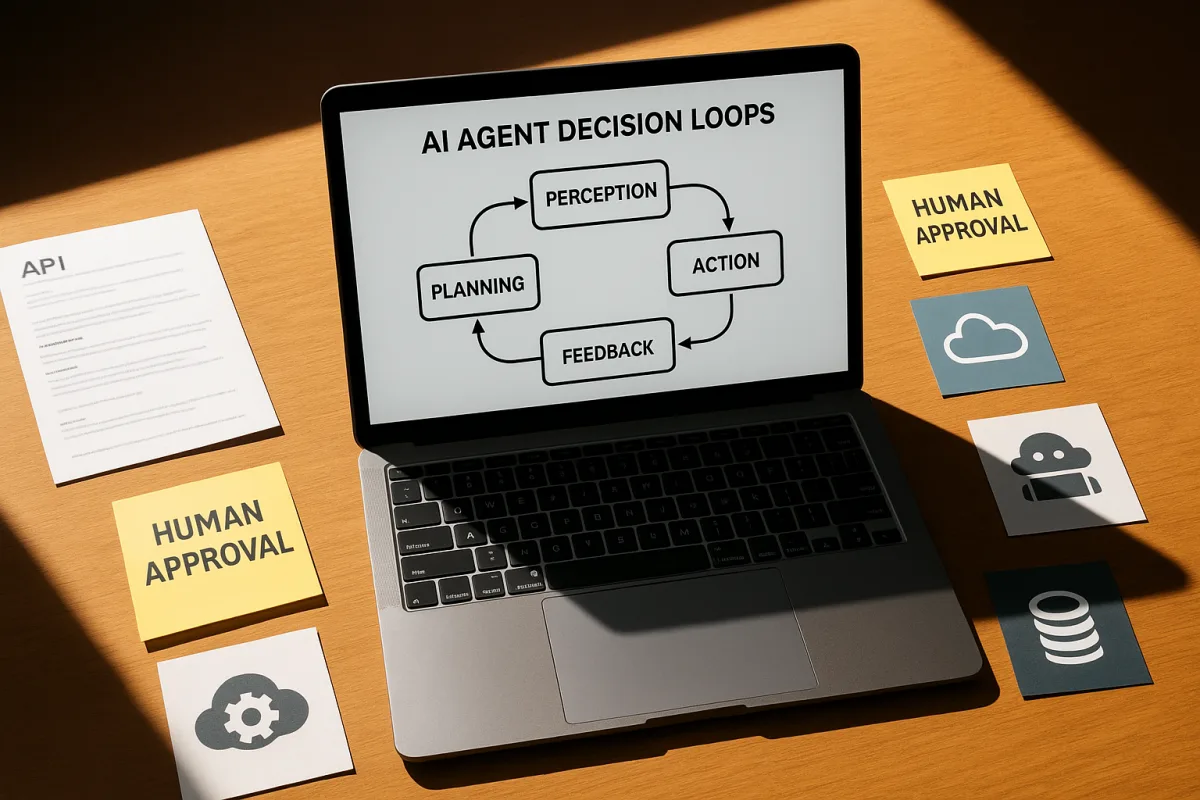
AI Agents Action Selection
Explore AI agents' action selection, integration challenges, and security in automation. Learn about personal AI agents and best practices.

AI Agents Data Governance and API Integration Best Practices
Explore AI agents data governance and API integration to ensure reliable, real-time responses in specialized domains.

AI Agent Development and Multi-Agent Systems Best Practices
Learn AI agent development essentials, from single-agent workflows to multi-agent systems and tool integration challenges.
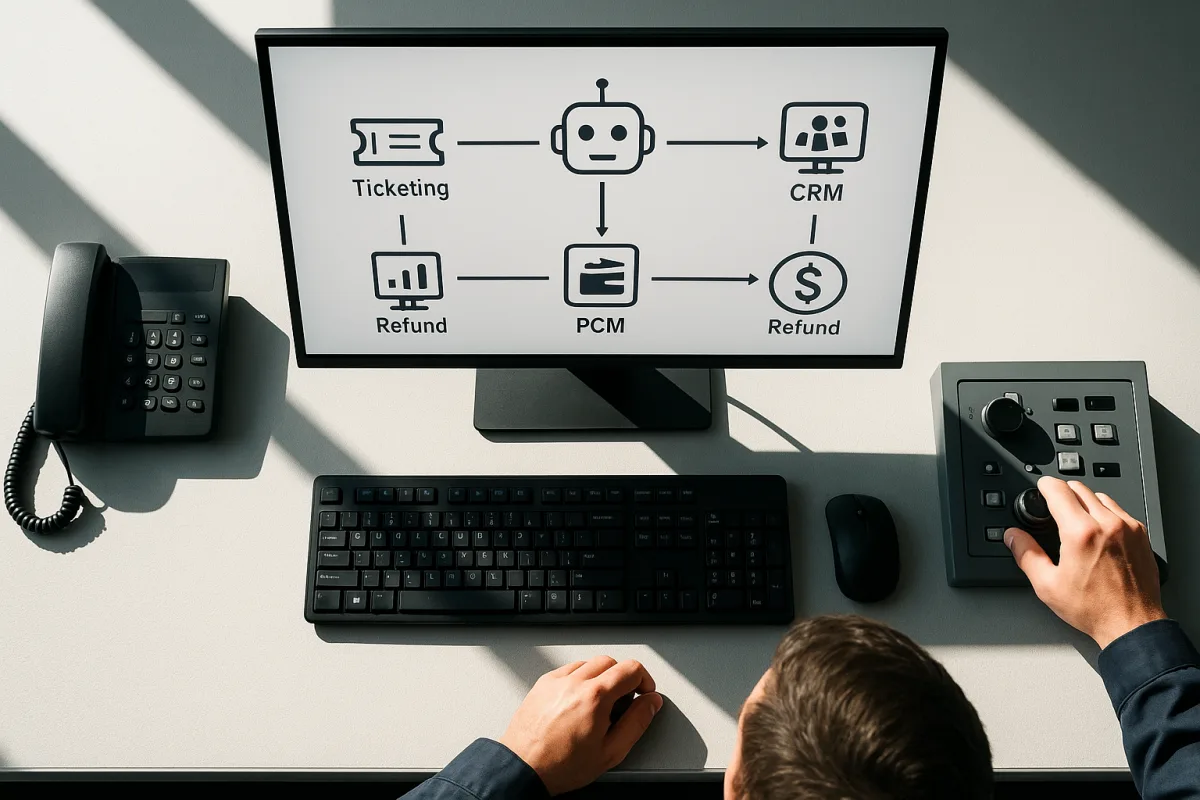
Agentic AI Systems: Control, Governance, and Practical Use
Explore agentic AI systems, their control layers, governance, and how they differ from conventional AI models in business automation.