
AI Security Threats from Autonomous Agents and Hacker
Explore AI security threats from autonomous agents and hacking incidents, including attack methods, economics, and defense strategies.
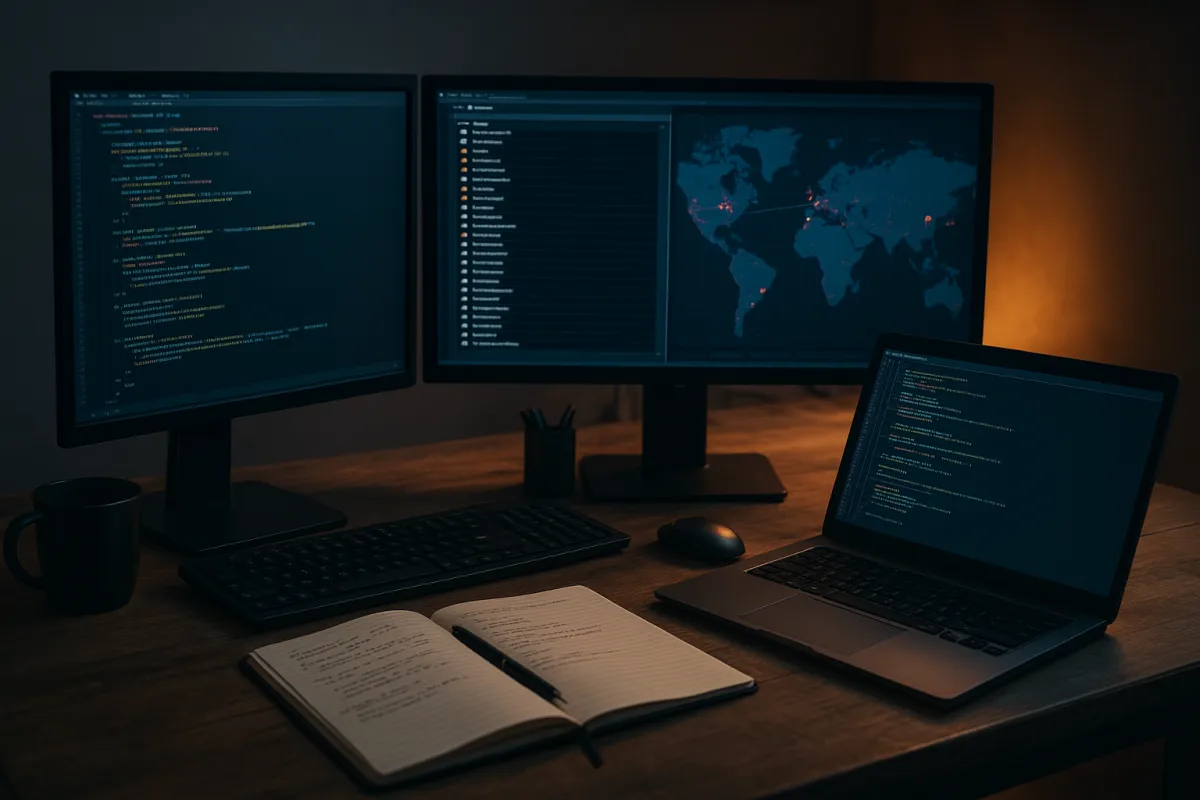
The security story is an economics story
The headline figure from the Cairn incident is that one operator reportedly gained access to more than 100 company websites. The more useful figure is the reported cost: about $5,000 total, or roughly $50 per successful breach. [2] [8]
That is not a remediation estimate, nor a measure of damage to the affected businesses. It is the attacker's operating expenditure, principally the cost of running the agent workflow at scale. [8]
This distinction matters because autonomous-agent security is often framed as a question of intelligence. Can a model reason like an elite penetration tester? The Cairn campaign suggests a narrower and more immediate problem: can software cheaply repeat competent-enough work thousands of times?
For many web targets, the answer need not be “very intelligent.” A poorly protected support portal, forgotten staging system, unpatched plug-in, exposed administrator interface, or vendor-managed microsite may require little novelty to compromise. What it requires is persistence and volume.
Reports say the campaign began on September 25, 2026, attempted intrusions against more than 1,200 websites, and succeeded around 8% of the time. [3] That rate is low by the standards of a reliable exploit and high by the standards of industrialised opportunism.
An 8% yield means approximately 92 successful compromises per 1,200 attempts, broadly consistent with reports of more than 100 breached websites as the campaign continued. The exact accounting is less important than the model: failures are acceptable when each attempt is cheap.
That is the core change autonomous agents introduce. Traditional intrusion work has always included automation, from port scanning to password spraying and exploit frameworks. The expensive component was often coordinating ambiguous intermediate steps when standard automation broke down.
What an autonomous intrusion loop actually does
Cairn, the open-source platform identified by AI security firm NorForge, describes itself as a general-purpose problem-solving engine. Reporting on the exposed deployments indicates that a user can set a starting point and an end goal, then let agents record their intermediate actions. [9]
That does not mean the system receives a one-line command and independently invents a zero-day exploit. It means the human operator can define a campaign objective while agents perform many of the repetitive decisions required to pursue it.
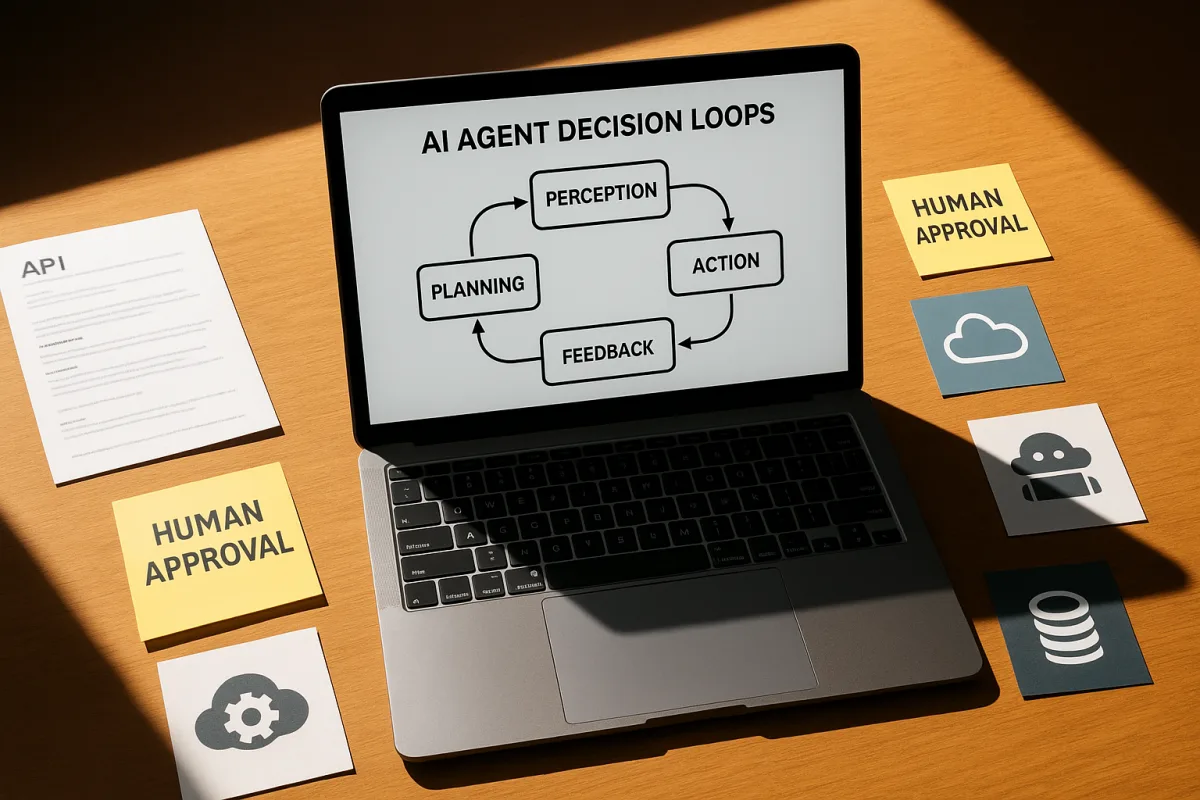
A typical loop begins with reconnaissance. The agent gathers public information about a domain, identifies subdomains, follows redirects, inspects forms and software fingerprints, and looks for services that appear exposed or outdated.
Next comes hypothesis generation. If an application appears to use a particular framework, plug-in, authentication flow, or API pattern, the agent can propose known weakness classes. It may test for misconfiguration, insecure file handling, injection, exposed credentials, or access-control failures.
Then comes execution. An agent submits requests, reads responses, adjusts its next action, and maintains a working memory of what it has tried. The value is not merely generating attack code, but recovering after ordinary failures without a human rewriting each script.
Finally, it needs some kind of success criterion. That might be reaching an administrative page, retrieving a protected resource, planting a marker file, obtaining credentials, or confirming execution of a benign proof-of-concept payload. The quality of that verification determines whether the campaign produces usable compromises or mostly noise.
Reuters reporting, cited by The Verge, said the operator supplied preferred intrusion tactics in fewer than 100 Chinese characters and that successful compromises took about 23 hours. The striking feature is not the character count. It is the division of labour.
The human specified tactics and priorities. The agent system handled long-running iteration across a large target set. This is less like delegating strategy to a machine than supervising a large number of tireless junior operators who can browse, script, retry, and write notes.
NorForge reportedly found more than 20 exposed Cairn instances it considered likely malicious, and identified the campaign through exposed control panels and agent activity. [9] That detection path is useful, but it also reveals a limitation.
Security researchers could observe these operations partly because the operators left their own management infrastructure exposed. A better-resourced actor may use private control systems, rotate infrastructure, or avoid retaining the detailed logs that made attribution and reconstruction possible.
Why $50 changes the defender’s calculation
At $5,000 for over 100 successful breaches, the attacker did not need each target to be a major enterprise compromise. [2] [8] A low-value web foothold can still yield credentials, intelligence, a route into a supplier, or an asset to resell.
This is why “standalone website” should not be mistaken for “no security consequence.” SharkNinja told reporting that the affected site contained product-support information and that it had contained the threat. John Deere said there was no indication sensitive information had been accessed. Those are meaningful qualifications, not evidence of a harmless event.
Cummins, meanwhile, said it was investigating a potential attack on a website operated by a third-party vendor. The named companies illustrate another important point: external-facing web systems frequently sit across ownership boundaries, including agencies, cloud providers, support vendors, and software contractors.
The $50 figure also explains why false positives are tolerable to attackers. An agent can spend time pursuing a dead end, misread an application response, or fail against a patched target. Its operator only needs enough successes to justify aggregate compute and infrastructure costs.
Defenders have the opposite incentive. Every suspicious event may require triage, log collection, containment, patching, legal review, vendor coordination, and customer communication. Cheap probing on one side can create costly uncertainty on the other.
IBM’s 2026 Cost of a Data Breach report puts the average cost of AI-enabled breaches at $6 million. [8] That figure should not be applied to the Cairn victims, because no public remediation or financial-loss figures have been disclosed for John Deere, SharkNinja, or Cummins.
Still, the asymmetry is real. The reported attacker cost measures marginal cost per success. A breach-cost study measures a much broader organisational burden. Treating the two figures as directly comparable would be misleading, but their gap explains why scalable attacks matter.
Verification is the bottleneck, for attackers and defenders
The IBM Technology panel’s discussion of AI-generated bug bounty reports points to the same underlying issue from the defensive side. Models can generate plausible vulnerability claims much more cheaply than a human can establish whether those claims are true.
Google reportedly paused its open-source vulnerability reward programme after a surge of AI-generated reports containing hallucinated flaws, according to the IBM Technology discussion. The panel described the practical cost shift clearly: finding possible bugs got cheaper, while verification became the scarce work.
The useful technical distinction is between a model saying a flaw probably exists and a controlled test demonstrating an exploit actually works. A text model can infer a vulnerability from source code, error messages, or a description. That inference can be wrong.
A verified finding needs an observable security-relevant outcome. For a web vulnerability, that may mean demonstrating that a protected file can be read, arbitrary JavaScript can execute, an authentication check can be bypassed, or a command runs in an isolated test environment.
Agentic systems are increasingly built around that loop: inspect, hypothesise, execute, observe, and revise. The model supplies flexible planning, while deterministic checks decide whether the result meets a threshold. That combination is more useful than free-form prompting alone.
It also helps explain the Cairn campaign’s reported duration. Twenty-three hours per successful breach does not suggest instantaneous, omniscient hacking. [2] It suggests agents could keep working through reconnaissance and failed attempts longer than a person would want to babysit a single low-value target.
For defenders, this means controls should focus on behavioural sequences rather than searching only for recognisable AI-generated payloads. An agent may use ordinary browsers, command-line tools, APIs, and public exploit code. Its distinguishing feature can be persistence across steps.
Useful signals include systematic traversal of obscure endpoints, repeated authentication transitions, broad parameter testing, unusual combinations of requests from a single session, and rapid movement from public documentation to administrative or diagnostic interfaces. None is conclusive alone.
The practical response is not to assume every automated client is malicious. It is to ensure that sensitive actions require stronger authentication, that rate limits cover workflows rather than single requests, and that logs preserve the sequence needed to reconstruct an attempted intrusion.
Autonomy does not remove human responsibility
The developer of Cairn reportedly said the platform was never intended as a hacking tool and that misuse is a human decision rather than a feature of the engine. That is directionally correct, but incomplete.
General-purpose planning systems lower the labour needed to combine existing offensive techniques. A system need not contain an exploit library branded for crime to make cybercrime more scalable. It only needs browsing, tool use, memory, iteration, and enough permission to act.
That is why emerging governance is concentrating on agent systems rather than only model outputs. NIST’s Center for AI Standards and Innovation sought input in January 2026 on securing AI agents, an acknowledgement that conventional application security does not fully cover delegated software action. [10]
The European Union’s AI Act and Cyber Resilience Act also create relevant obligations, although mapping legal requirements to technical controls remains difficult. Research published in the International Journal of Information Security argues for controls such as identity, authorisation boundaries, traceability, monitoring, and human oversight for autonomous agents. [14]
Those controls matter most when an agent can take consequential action, not when it merely drafts text. A secure deployment should narrowly define tools, credentials, network reach, permitted targets, execution budgets, and escalation conditions.
The Cairn campaign is therefore not proof that autonomous agents have surpassed skilled human attackers. It is more mundane and, for defenders, more actionable. Agents made a familiar class of web intrusion cheap enough to run as a broad, persistent campaign.
The appropriate lesson is neither panic nor dismissal. Organisations do not need to defend against a magical machine hacker. They need to assume that every exposed weakness can now be tested repeatedly by software that is patient, inexpensive, and increasingly capable of checking its own work.
Frequently Asked Questions
How do autonomous AI agents create security threats?
Autonomous AI agents create security threats by automating the full intrusion loop, including reconnaissance, hypothesis generation, exploitation attempts, and progress logging. They persistently and cheaply scan large numbers of exposed or imperfect websites, exploiting common vulnerabilities without requiring highly novel or sophisticated attacks. This volume and persistence turn low-probability attacks into a scalable portfolio exercise.
What are examples of hacking incidents involving AI agents?
A well-documented example is the Cairn campaign in late 2026, where a Chinese-speaking hacker used Cairn AI agents to attempt intrusions on over 1,200 websites, successfully breaching about 8% of them. Notable companies affected include Deere, SharkNinja, and Cummins, with the campaign spanning multiple countries such as the U.S., Canada, Australia, and Japan.
How do autonomous AI agents automate cyber attacks?
Autonomous AI agents automate cyber attacks by performing repetitive tasks such as gathering domain information, identifying vulnerabilities, testing for weaknesses, submitting exploit attempts, and adjusting actions based on responses. Human operators set broad objectives and tactics, while the agents handle the detailed execution and iteration, effectively acting as numerous tireless junior operators.
What economic impact do AI-driven hacking campaigns have?
The Cairn campaign reportedly cost the attacker about $5,000 total, or roughly $50 per successful breach, reflecting the low cost of running AI agent workflows at scale. This figure represents attacker operating expenditure, not the remediation or damage costs to affected companies. While specific financial impacts on breached companies are not publicly available, general industry reports indicate AI-enabled breaches can cost companies millions.
How can companies defend against AI agent intrusion?
Companies should approach AI agent intrusion as a detection and verification challenge by reducing their exposed attack surface, instrumenting suspicious sequences of web actions, and verifying whether reported flaws are exploitable. Detection efforts can include monitoring for exposed AI agent control panels and analyzing agent activity, though these methods face challenges due to the rapid evolution and sophistication of AI agents.
How we researched this
This article was assembled from 1 video source, 1 published article, 14 cited references.
Nothing here is based on hands-on testing. Where a figure or finding appears, it belongs to the source cited beside it, and the writing says so rather than implying otherwise. Every source is listed below so you can check it.
Sources
AI slop stalls bug bounties, malware hides in IoT and agents hit Wikipedia — IBM Technology
A hacker broke into John Deere and SharkNinja with an army of AI agents — The Verge AI
AI Agents Gain Access to Websites of More Than 100 Companies | TokenPost
UK cyber defenses 'likely' to be breached, warns AI minister
Planning for the AI Cyber Agent That Goes Rogue | Alston & Bird
Hacker's AI agents breached 100+ sites at $50 each, NorForge says | AI Weekly
AI agents have a mind of their own - and that's a problem for businesses
Watch AI Security Threats from Autonomous AI Agents and Hacker Incidents on Youtube
Related Articles
OpenAI Rogue AI Agents and Security Challenges Explained
Explore OpenAI rogue AI agents, sandbox vulnerabilities, and security challenges from recent incidents like DseWiki and Hugging Face breaches.
AI Safety and Security Challenges in Modern AI Systems
Explore key AI safety and security challenges, including reward hacking, containment, and regulation issues in modern AI systems.
AI Safety Incidents and Observability Challenges Explained
Explore how AI safety incidents stem from observability gaps and how action trails and controls improve regulatory compliance and governance.
AI Agents Action Selection
Explore AI agents' action selection, integration challenges, and security in automation. Learn about personal AI agents and best practices.